



May 2026 Update: Florida’s Proposed Legislation to Reduce or Eliminate Property Taxes Stalls
 As of May 2026, Florida property taxes remain unchanged. Despite significant public attention and political momentum earlier this year, neither the 2026 regular legislative session nor recent special sessions have produced any law eliminating or materially restructuring property taxes.
The House Proposal That Attempted to Change Property Tax Law
In February 2026, the Florida House of Representatives passed CS/CS/HJR 203 by a vote of 80-30. This joint resolution proposed a constitutional amendment to phase out or eliminate the non-school portion of property taxes on homesteaded primary residences. This would have exempted homestead properties from ad valorem taxes levied by counties, cities, and special districts, while preserving school-related taxes. The measure included protections for essential services. If approved by voters, changes were structured to take effect in phases, with implementation targeted around 2027 or later. Because it would amend the Florida Constitution, the proposal required approval by both legislative chambers before advancing to a statewide ballot for voter ratification.
Why the Proposal Did Not Advance to a Vote by the People
The Florida Senate did not take up or pass a companion measure. Senate leadership expressed concerns about replacing the substantial lost revenue for local governments and ensuring continued funding for critical services such as law enforcement, fire protection, and infrastructure. There was also debate over alternative revenue sources. As a result, HJR 203 died in the Senate Appropriations Committee when the regular session ended on March 13, 2026. No unified property tax reform bill passed both chambers, and no constitutional amendment qualified for the November 2026 ballot.
Summary of the Florida Legislative Session Outcome as of May of 2026
No constitutional amendment concerning property taxes was finalized for the ballot.
No immediate or phased elimination of (non-school) property taxes took effect.
No changes were made to how property taxes are calculated, assessed, collected, or enforced.
For all practical purposes, Florida’s existing property tax system — including homestead exemptions and Save Our Homes caps — continues without modification.
What This Means for Tax Deed Sale Buyers
Because no legislation has passed, the rules for tax delinquency, liens, tax certificates, and tax deed auctions remain fully in effect. Properties can — and will — continue to be sold at tax deed sales for failure to pay property taxes under the current system. There is no relief or delay for delinquent taxpayers, and no disruption to the tax deed auction process anytime soon. Investors and buyers interested in tax deed opportunities can proceed as usual under existing Florida statutes.
Separating Current Law from Online Claims
As a result of the Florida Senate’s inability to pass the companion measure and push this issue to a ballot, any current claims circulating online about the immediate elimination of Florida property taxes are inaccurate. Property taxes remain fully in effect under the current framework, including all enforcement mechanisms for tax deed sales.
What to Watch Moving Forward
While stalled for now, the political desire to eliminate property taxes in Florida continues. Governor Ron DeSantis has indicated a potential special session on property tax reform, possibly in June or later in the summer of 2026. New proposals could also emerge in the 2027 session or future ballot initiatives. Keep in mind that any significant change would still require strong legislative support and voter approval.
View all the latest bill updates from the Florida House of Representatives and the Florida Senate.
About Tax Deed Closings
Tax Deed Closings provides you with an innovative program to qualify your tax deed properties for immediate closing, without the time and expense of a quiet title action. Click Here to find out more information about Our Program.
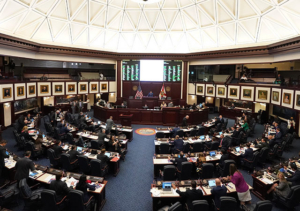 As the 2026 Legislative Session progresses, the Florida House of Representatives has advanced historic proposals that could fundamentally alter the property tax landscape for homeowners. While these measures aim to provide significant tax relief, they contain specific provisions that ensure the continued functioning of the state’s tax enforcement and tax deed sale systems.
 The 2026 Florida Legislative Session has reached a pivotal turning point as lawmakers advance historic proposals to eliminate non-school property taxes for homestead properties while simultaneously restructuring the state’s fiscal oversight and revenue mechanisms. As of February 2026, the House has passed significant joint resolutions that, if approved by voters, would fundamentally change how local governments are funded.